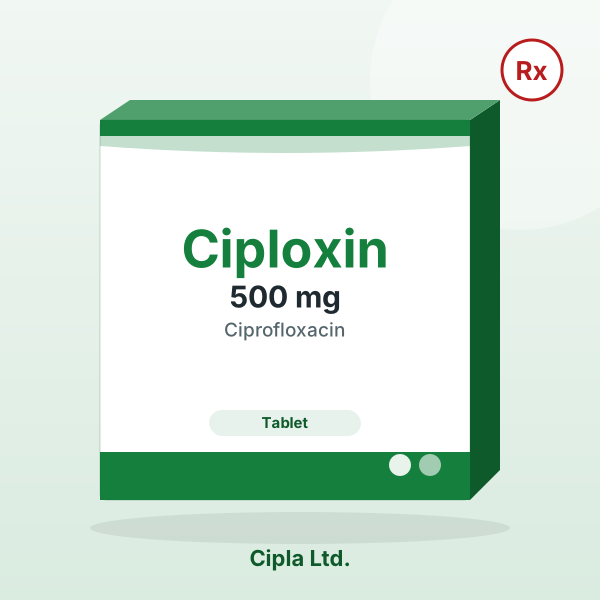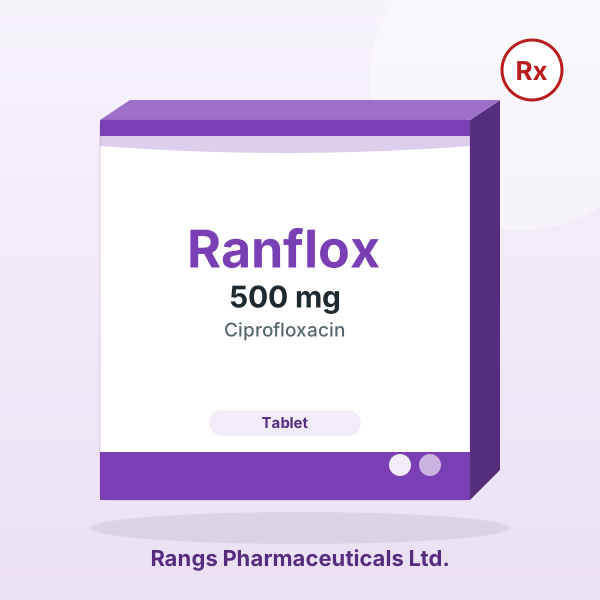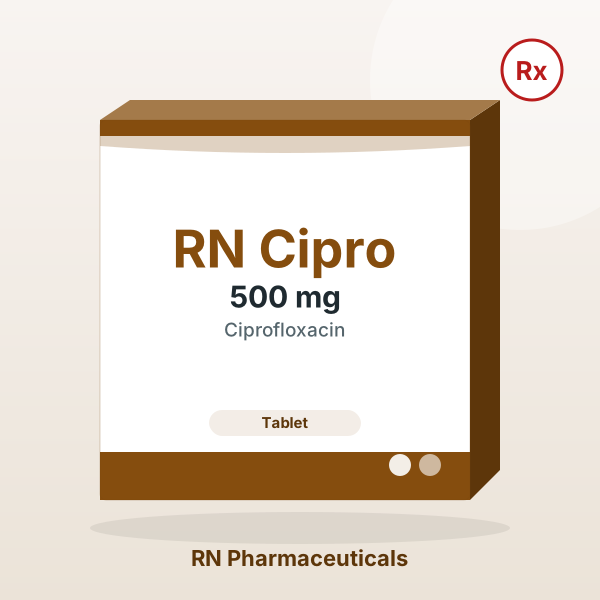
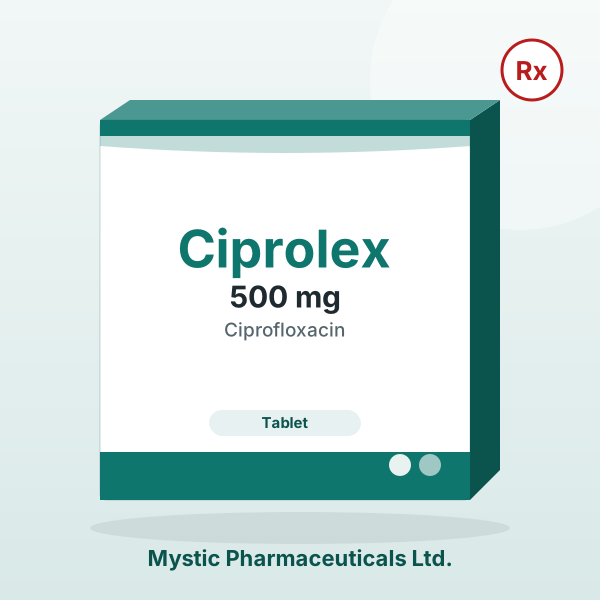
Ciprolex 500 mg Tablet
Ciprofloxacin · 500 mg
Medicine information: uses, dosage, side effects ↓
- Delivery charge from ৳60; free over ৳1,999
- 100% genuine product
- Easy return within 7 days if damaged or wrong
Product details
- Generic name
- Ciprofloxacin
- Strength
- 500 mg
- Dosage form
- Tablet
- Manufacturer / brand
- Mystic Pharmaceuticals Ltd.
- SKU
- 121-0010-023
Medicine information: Ciprofloxacin
Indications
Fluoroquinolone antibiotic for infections caused by sensitive bacteria:
- Urinary tract and kidney infections, prostatitis
- Typhoid fever and infectious diarrhoea
- Gonorrhoea
- Bone, joint, skin and soft-tissue infections
- Some chest infections (not first choice for pneumococcal pneumonia)
- Eye/ear drops: bacterial conjunctivitis, corneal ulcer, ear infections
Dosage & administration
Adults (oral): 250–750 mg every 12 hours depending on infection. Uncomplicated cystitis: 250 mg twice daily for 3 days. Typhoid: 500 mg twice daily for 7–14 days.
IV infusion: 200–400 mg every 8–12 hours.
Children: used only when necessary (e.g. complicated UTI, cystic fibrosis), usually 10–20 mg/kg twice daily, as prescribed.
Eye drops: 1–2 drops every 2–4 hours while awake, less often as infection improves.
- Take with water; avoid taking with milk, yoghurt, antacids, iron, zinc or calcium (take ciprofloxacin 2 hours before or 6 hours after them).
- Drink plenty of fluids.
Contraindications
- Allergy to ciprofloxacin or other quinolones
- Taking tizanidine
- History of tendon problems caused by a quinolone
Side effects
Common: nausea, diarrhoea, headache, dizziness.
Less common: abdominal pain, rash, sleep problems, raised liver enzymes.
Rare but serious: tendon pain or rupture (especially Achilles), nerve damage (tingling, numbness), confusion, seizures, irregular heartbeat (QT prolongation), aortic aneurysm, low blood sugar, severe allergy, C. difficile diarrhoea, sun sensitivity.
Precautions & warnings
- Stop and see a doctor at the first sign of tendon pain or swelling; higher risk over 60 years, with steroids, or after transplant.
- Use with care in epilepsy, myasthenia gravis, heart rhythm problems, diabetes.
- Avoid strong sunlight.
- May impair driving.
- Not routinely used in children and teenagers.
Pregnancy & breastfeeding
Usually avoided in pregnancy and breastfeeding unless no safer alternative exists. Eye drops are generally acceptable.
Interactions
- Antacids, iron, zinc, calcium, milk products (reduce absorption)
- Theophylline, caffeine (levels rise)
- Tizanidine (contraindicated)
- Warfarin (bleeding risk)
- Drugs that prolong QT (e.g. some antiarrhythmics, antipsychotics, macrolides)
- NSAIDs (higher seizure risk)
- Diabetes medicines (blood sugar changes)
Overdose
Can cause kidney damage, dizziness, confusion and seizures. Seek medical care; keep well hydrated.
Storage
Store below 30°C, protected from light and moisture. Discard eye drops 4 weeks after opening.
This information is for general reference only. Always follow the dose prescribed by your doctor and ask a doctor or pharmacist before taking any medicine.
Ratings & reviews
No reviews yet. Be the first to review this product.